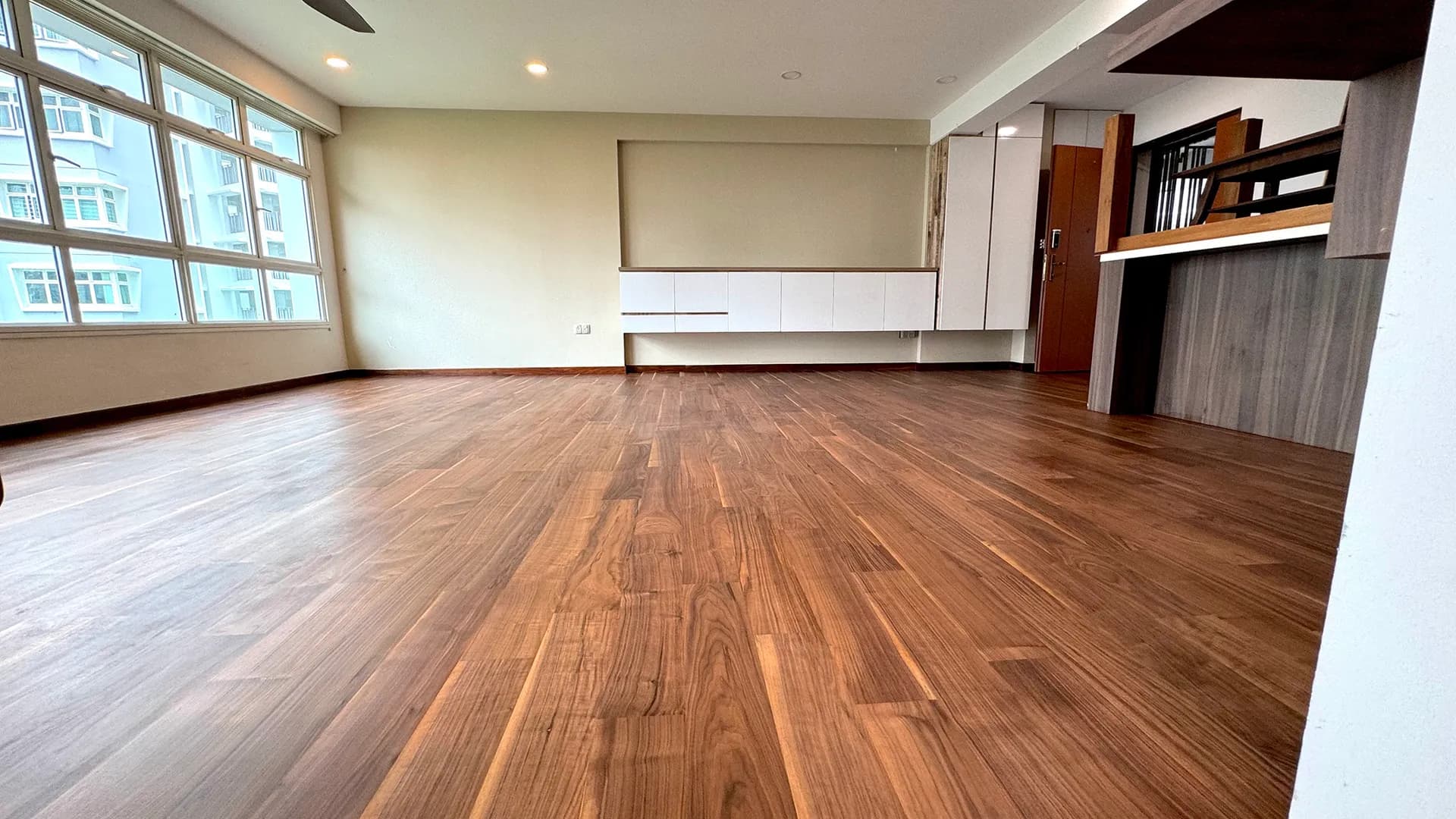
Why Parquet Floors Are Still Popular in Singapore
Parquet has been a fixture of Singapore homes since the 1970s, and for good reason. Timber floors are warm underfoot, quieter than tile, forgiving on the knees and timeless in appearance. From HDB flats in Bedok to shophouses in Jalan Besar, parquet adds a character that no porcelain tile can replicate.
The trade-off is maintenance. Unlike tile, timber is a living material that expands, contracts and wears. In Singapore's humid climate, that wear shows up faster than in temperate countries.
What Causes Parquet Floors to Dull
- Foot traffic abrasion — the topcoat wears thin along common walking paths
- Grit and sand tracked in from outside, acting like sandpaper underfoot
- Moisture from mopping, air-conditioning condensation and spills
- Direct sunlight fading and drying out exposed sections
- Heavy furniture leaving dents and scratches
- Old varnish turning yellow, flaky or patchy over time
Signs It Is Time to Sand and Polish
- The floor looks grey or faded rather than rich and warm
- You can see scratches when light reflects off the surface
- Water leaves dark marks that do not dry out
- The varnish is flaking, peeling or worn through in patches
- Boards feel rough instead of smooth
- Squeaks and gaps have developed between strips
If the wear has reached the bare wood, polishing alone will not fix it — the floor needs sanding first.
The Parquet Sanding and Polishing Process
Step 1: Inspection and Quotation
The contractor checks the wood species, the thickness of the strips and the extent of the damage. Thin or engineered floors can only be sanded a limited number of times, so this assessment matters.
Step 2: Preparation and Dust Control
Furniture is shifted, skirting and door frames are taped, and the work area is sealed off. Modern dust-free sanding machines connect directly to extraction units, keeping airborne dust to a minimum.
Step 3: Sanding and Gap Filling
Progressive grits remove the old finish and level the surface. Gaps between strips are filled with a wood filler matched to the floor colour, and damaged boards are replaced at this stage.
Step 4: Staining (Optional)
If you want a darker, warmer or more uniform tone, a stain is applied before the protective coats. A small sample patch is usually tested first so there are no surprises.
Step 5: Sealing and Finishing
Two to three coats of varnish or oil are applied, with light sanding between coats. You can choose matt, satin or high-gloss depending on the look you want.
Varnish vs Oil: Which Finish Should You Choose?
- Water-based varnish: low odour, fast drying, clear finish, low VOC — the most popular choice for occupied homes
- Oil-based varnish: warmer amber tone, harder wearing, but stronger smell and longer drying time
- Hardwax oil: natural look, easy to spot-repair, but requires more frequent maintenance
- High-gloss finish: dramatic and reflective, but shows dust and scratches more easily
- Matt or satin finish: more forgiving, hides minor imperfections, suits most Singapore homes
How Much Does Parquet Polishing Cost in Singapore?
Pricing depends on floor area, wood condition, number of coats and whether repairs are needed. Typical market ranges are quoted per square foot:
- Basic sanding and two coats of varnish: entry-level range
- Sanding with three coats and gap filling: mid range
- Staining or colour change: additional cost per square foot
- Board replacement: charged per board or per square foot
- Decking and outdoor timber: quoted separately due to weatherproofing requirements
Always compare quotations on a like-for-like basis. A cheaper quote with fewer coats or no gap filling will not last as long.
How Long Does the Work Take?
- Single bedroom: about 1 day
- 3-room HDB flat: 1 to 2 days
- 4 to 5-room flat or condo: 2 to 3 days
- Larger landed property: 3 to 5 days
Drying time between coats is included in these estimates. Water-based finishes allow you to walk on the floor sooner than oil-based ones.
Parquet Aftercare Tips
- Vacuum or sweep daily with a soft brush — grit is the number one enemy of timber
- Use a damp, well-wrung mop, never a soaking wet one
- Avoid steam mops, which force moisture into the joints
- Place felt pads under all furniture legs and use coasters under planters
- Wipe up spills within minutes
- Keep indoor humidity moderate — air-conditioning actually helps here
- Use rugs in high-traffic zones to reduce surface wear
- Schedule a light re-coat every 3 to 5 years before the wood is exposed
Frequently Asked Questions
Can all parquet floors be sanded?
Solid timber and most traditional parquet strips can be sanded several times. Thin laminate and some engineered floors cannot. We confirm this during the free inspection.
Can I stay at home during the work?
Yes, though you should avoid the work area. Water-based finishes have low odour, and rooms are usually usable within 24 hours.
Do you repair termite or water damage?
Yes. Affected boards are removed, the area is treated, and new boards are colour-matched before polishing.
How soon can furniture go back?
Light items after 24 hours, heavy items after 48 to 72 hours once the finish has fully cured.
Restore Your Timber Floors with Tuhfa Construction
We sand, repair, stain and seal parquet and timber floors across Singapore — for HDB flats, condominiums, landed homes, offices and shophouses. Every project starts with a free floor inspection and a fixed, itemised quotation.
Call or WhatsApp +65 8576 6635, or email Tuhfa.construction@gmail.com to book your assessment.